
Central Europe has entered a period of profound geopolitical and economic upheaval, punctuated by a direct security breach on NATO territory and a fundamental transformation of Hungarian domestic and foreign policy. Over the last week, the region has seen an escalation in military tensions alongside a significant reshuffling of political alliances that could redefine the European Union’s eastern flank for years to come.
Security Tensions Escalate After Galați Strike
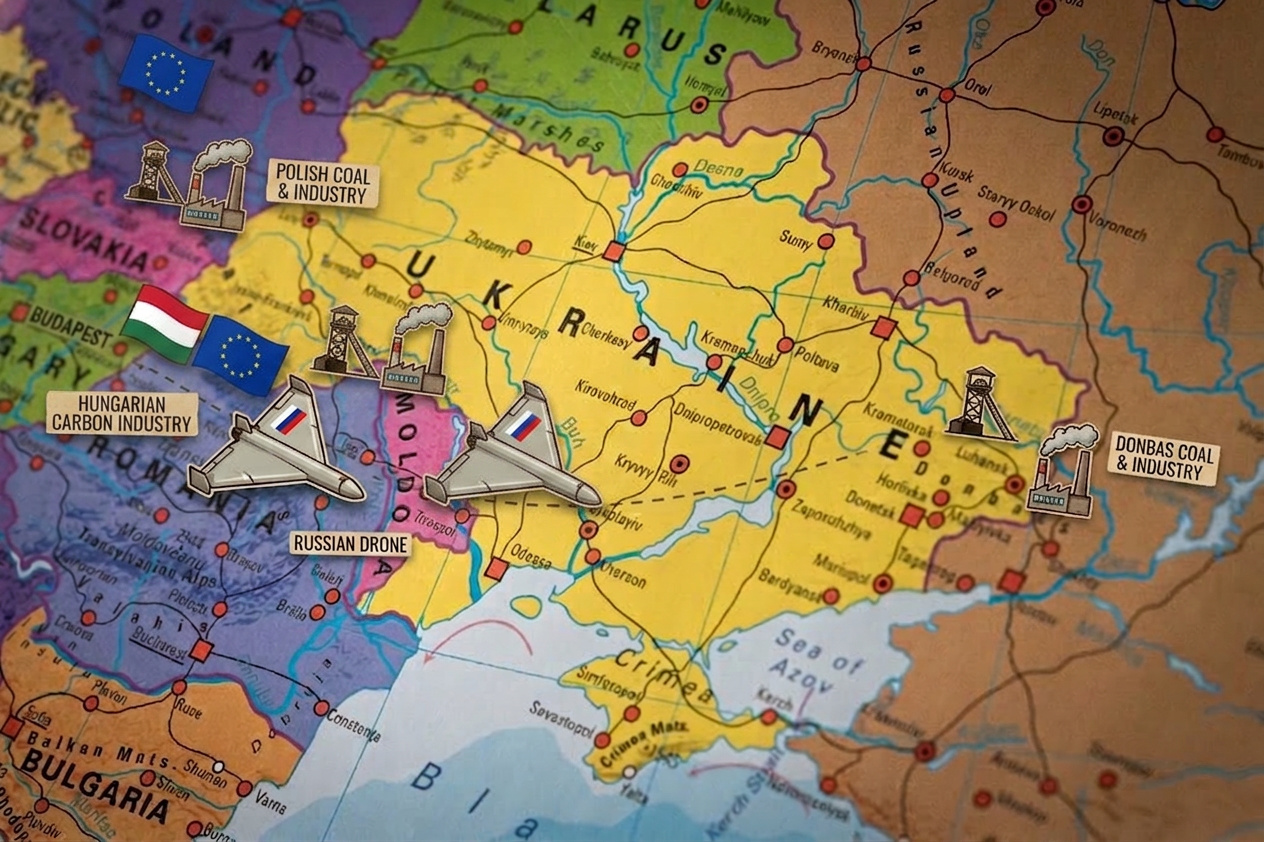
The most immediate crisis unfolded on May 29, 2026, when a Russian-origin drone crashed in the Romanian city of Galați. The incident, which resulted in two civilian injuries, represents a significant escalation in the spillover from the ongoing conflict in Ukraine. NATO officials were quick to condemn the event, categorizing the crash as a “serious security violation” on Allied territory. In a statement released shortly after the strike, a NATO Spokesperson confirmed that the alliance is moving additional air defense assets to the border to ensure the safety of its members.
As reported by The Guardian, the strike has intensified fears among frontline states. The presence of Russian military hardware on Romanian soil has solidified a regional consensus regarding the need for heightened readiness. In response, Poland has moved to sign new bilateral defense agreements with its Baltic partners, aiming to counter rising threats and increase the integration of rapid response forces. This collective shift suggests that Central European nations are no longer willing to view such incidents as isolated accidents but rather as a pattern of aggression that requires a permanent increase in Allied presence along the Black Sea coast.
The ‘Magyar Era’ and the Revival of the V4
While security concerns dominate the headlines, a political earthquake in Budapest is altering the internal dynamics of the Visegrad Group (V4). Following the ascent of Péter Magyar as Prime Minister, Hungary has decisively pivoted away from the isolationist and often obstructionist policies of the Viktor Orbán era. Magyar, who campaigned on a platform of transparency and European reintegration, has wasted no time in initiating wide-ranging corruption investigations into the previous administration.
“The era of state-sponsored corruption is over,” Prime Minister Magyar stated during a landmark press conference in Brussels, as cited by the Financial Times. “Hungary returns to its rightful place at the heart of Europe as a reliable and transparent partner.” This shift has already yielded tangible results; the European Commission has unblocked a portion of Hungary’s Cohesion and Recovery funds, citing Budapest’s swift improvements in judicial independence and the rule of law. This rapprochement has breathed new life into the V4 bloc, with Poland, Czechia, and Slovakia expressing a renewed willingness to collaborate with a reformed Hungarian government on regional issues.
The Industrial Rebellion Against the Green Deal
However, the newfound political unity in the region is being tested by economic pressures. On May 27, 2026, a coalition of six EU member states—Poland, Czechia, Slovakia, Romania, Bulgaria, and Croatia—issued a formal challenge to the European Commission’s climate agenda. The group is demanding immediate relief from the costs associated with the Green Deal, arguing that the high price of energy is systematically de-industrializing Central Europe.
In a joint statement from the Polish and Czech Ministries of Industry, officials warned: “We cannot allow the Green Deal to become a suicide pact for Central European industry.” The coalition argues that heavy industry in the region is currently facing energy prices that are triple those of global competitors, undermining the competitiveness of the manufacturing sector which serves as the backbone of their economies. According to Euronews, the European Commission now faces the delicate task of balancing its ambitious environmental targets with the political necessity of supporting the economic stability of these reformist eastern governments.
A Crossroads for the Region
The events of the past week demonstrate a region at a critical crossroads. From the tactical response to the drone strike in Galați to the strategic realignment in Budapest, Central Europe is asserting a more unified, yet nuanced, voice on the global stage. The revival of the Visegrad Group under Péter Magyar provides a platform for these nations to address their shared security and economic concerns more effectively. However, as the regional industrial bloc continues to push back against Brussels’ environmental regulations, the tension between local economic survival and pan-European climate goals remains a potent source of future friction.
As NATO surveillance protocols remain at an enhanced state of readiness, the eyes of the world remain fixed on this vital corridor of the European continent. Whether through military cooperation or diplomatic reform, the leaders of Central Europe are signaling that they will no longer be passive observers in the shaping of the continent’s future.